
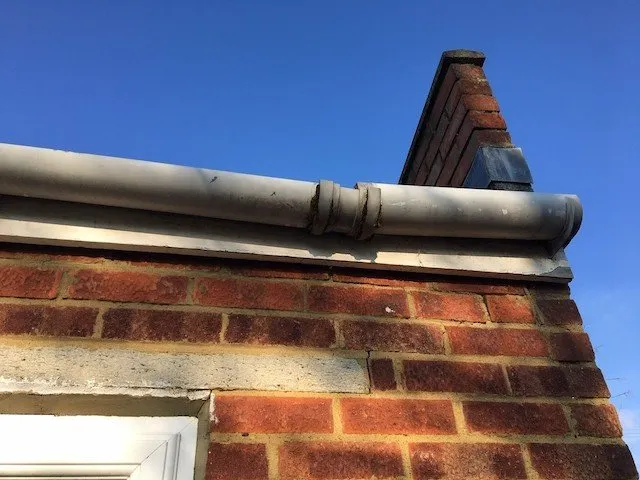
If you've ever woken up to the sound of dripping water when it's not raining indoors — or watched helplessly as a stream of water pours down your brickwork like a budget waterfall feature — then you'll know: broken gutters are no joke.
I learned this the hard way. A few years back, I ignored the slightly sagging bit of gutter at the back of our house. It didn't look urgent, and life was busy — school runs, work, the usual chaos. Then came a long stretch of heavy rain, and that small sag turned into a full-blown leak. Water ran straight down the wall, soaked through the brickwork, and made its way into the kitchen. The damp patch on the ceiling wasn't just ugly — it was expensive.
So, if you're wondering whether your gutters need a bit of love, I'm here to help you spot the signs before it gets to that point.
1. Gutters That Sag, Crack, or Look Like They've Had Enough
This one's obvious, but so easy to overlook. If you can see parts of your gutter hanging lower than the rest, or if sections are cracked, rusting, or pulling away from the roof, don't wait. That's not just wear and tear — it's your home trying to tell you something.
2. Watermarks and Peeling Paint on Your Walls
If you notice black streaks on your brickwork, paint bubbling or peeling under the roofline, or a weird greenish tinge forming where it shouldn't — that's probably water escaping your gutters and making itself at home on your walls.
3. Water Overflowing Like a Mini-Niagara
If your gutters spill over every time it rains, it's likely a blockage. A clean might sort it — but if it's happening regularly, something else could be wrong. Maybe the slope's off. Maybe your gutters are too narrow for the rainfall (especially common in older London homes).
4. Pools of Water and Washed-Away Soil
Flat roofs can cause that kind of day — especially if ponding water goes unnoticed. If you've got puddles that hang around long after the rain stops, your roof might not be draining properly. Water should be directed away from your home, not dumped at its feet. If left alone, that kind of damage can start messing with your foundations — and that's a whole other level of expensive.
5. Rust Spots and Peeling Gutter Paint
Rust doesn't just look bad. It means moisture is sitting where it shouldn't, eating away at the metal. If you're constantly repainting or patching, it might be time to switch to something lower maintenance, like PVCu.
6. Mould in the Loft? Don't Ignore It
You wouldn't think gutters could affect the inside of your house, but they absolutely can. Water had been seeping in through a small leak where the gutter met the roofline. It dripped into the loft, soaked the insulation, and let damp take hold.
Just another reminder that what's out of sight shouldn't always be out of mind.
7. Gutter Joints That Come Apart
When gutter sections separate or shift out of place, water finds the easiest escape route — which usually means down your wall or behind the fascia. You might be able to seal it with a bit of DIY, but if it's happening often, there's a bigger issue.
8. Random Screws or Brackets on the Ground
If you're spotting hardware on the ground, especially after strong wind or rain, it's worth checking your gutters. A falling section can damage cars, gardens, or worse — hurt someone. It's not worth the risk.
9. Water Damage Inside the House
A small brown stain on the living room ceiling turned out to be the beginning of a bigger problem. If you're seeing damp or discolouration inside, don't just patch it up with paint and hope for the best. Look outside — your gutters could be the sneaky culprit.
10. Your Gutters Are Just... Old
Sometimes there's no big dramatic moment. Sometimes, your guttering is just old, tired, and quietly not doing its job.
If it's been up there for 20 years or more, it's worth checking. Even if it looks fine from ground level, small cracks or worn seals can let water escape in places you don't want it to.